Each year, the International Society for Computational Biology Student Council (ISCB-SC) organizes a conference for students and early career scientists in computational biology. The Student Council Symposium (SCS) is typically the day before the Intelligent Systems for Molecular Biology conference and welcomes scientists from all over the world. As one of the organizers of SCS this year, I had to be in Prague to administer the conference and deal with last-minute . Check out these links if you’re interested in the Student Council (twitter), or want to read some writing I’ve done on planning an international conference in the past.
We had 3 excellent keynotes this year:
- Dr. Christine Orengo, professor at UCL and protein structure expert. Dr. Orengo gave an overview of her research, but spent most of the time speaking about advice for young scientists. A major point she stressed was to carve out your own niche in the research world. Find an area that combines what you’re good at, what interests you, and where the field isn’t too crowded. There, you can maximize the impact of your work and can be the most successful without excessive competition. Dr. Orengo also spoke about how important good relationships with your competitors are. I took this away from the lecture, “keep your collaborators close, but keep your competitors closer.” Not to compare scientific research to The Godfather, but the point was that you should treat your competitors well. You can learn from them, be motivated by them, and might even end up joining forces in the end!
- Dr. Johannes Söeding, professor at the Max Planck Institute for Biophysical Chemistry and another protein sequence, structure and homology expert. His lecture was more focused on research his team had been doing. Quite successfully, I might add, as we had two of his students presenting at SCS!
- Fiona Nielsen, founder and CEO of Reopositive. Fiona talked about her transition from academia to private industry. Deep in the research process, she found it almost impossible to identify or access datasets that would support her project. It’s a problem I’ve seen over and over again in my own research: there are many databases of genotyping or gene expression data, each with their own datasets, formats and access rules. After identifying the data you need, it can take months to be approved if the dataset has restricted access (for patient sensitive information or germline mutation status). Majorly frustrated by these repetitive roadblocks, Fiona was driven to solve this problem. She first established a charity (DNAdigest) and then a company (Repositve). It was interesting to hear Fiona’s take on this winding career path, and helpful to be reminded that pure research isn’t the only path that can have a positive impact on patients.
Another highlight of this year was the flash presentations: 5 minutes, 2 slides and 1 chance to sell your work to the crowd. Flash presentations gave many more people a chance to speak – we had 12 this year. I was worried that keeping people to the 5 minute time limit would be difficult, but everyone stayed on track and they were a big success. We’ll definitely have more flash presentations at future SCS.

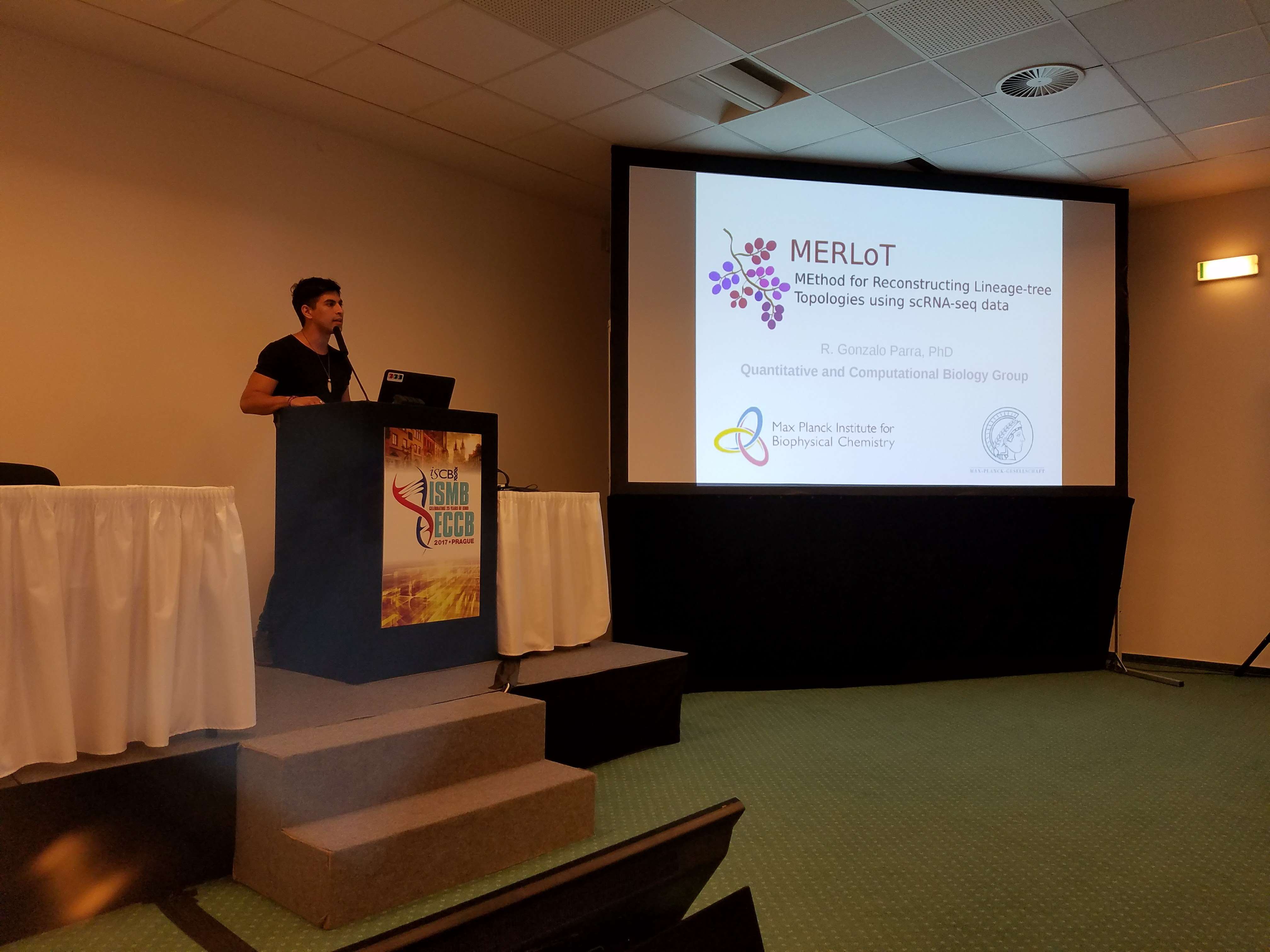
This was also the largest SCS I’ve ever attended or organized — we had 75 poster presentations and even more people registered for the symposium! I enjoyed helping to organize an event that brought people from such diverse and far-reaching backgrounds together. A lot of time and effort goes into SCS, but it’s rewarding and worth it in the end.
Finally, we moved the crowd to a nearby restaurant and bar for the “networking event,” which is a chance to let off some steam and enjoy a good meal while avoiding the topic of research entirely. It was great fun, even if Bart did hog all the beer!
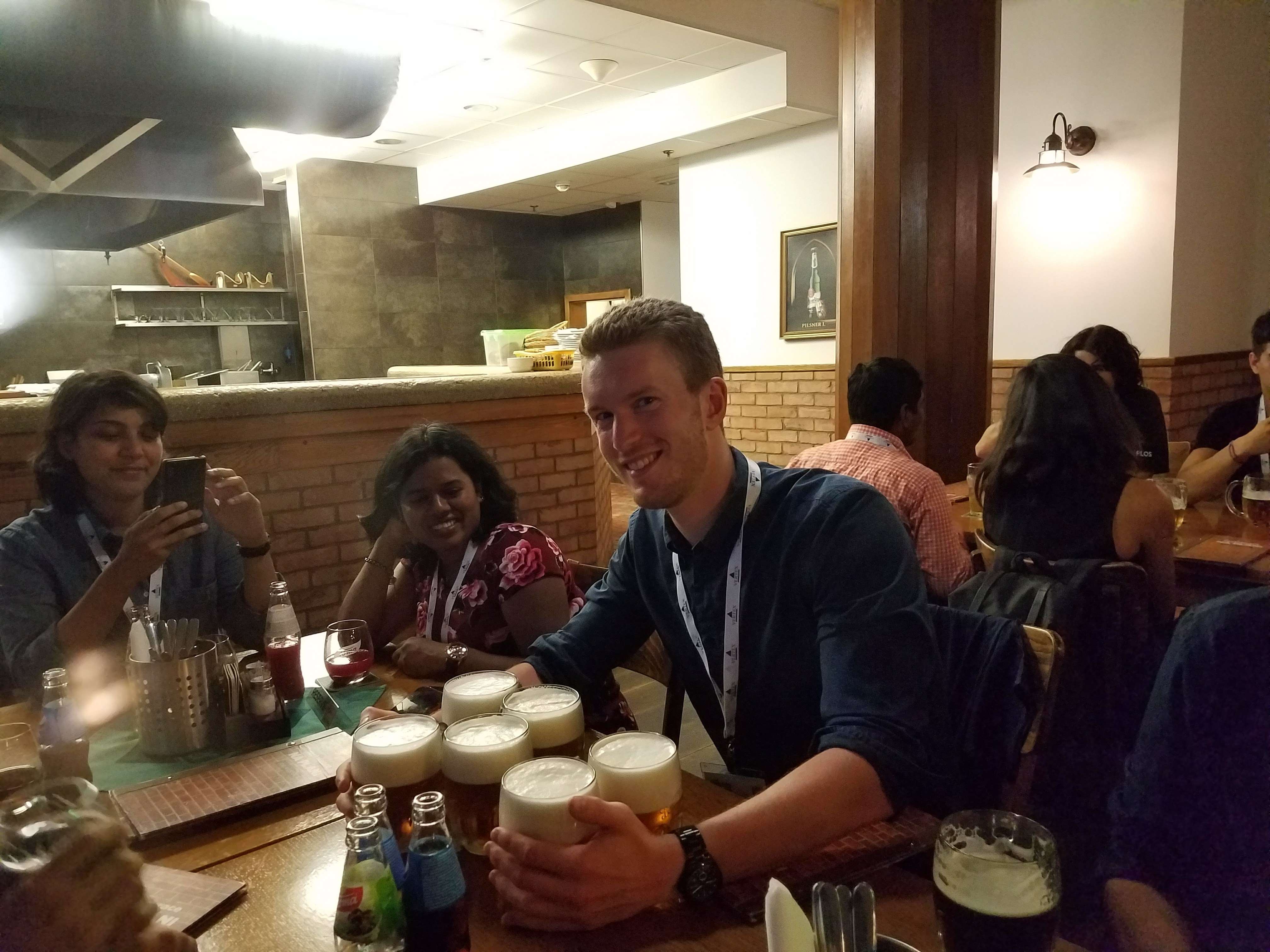
A huge thanks to the other SCS organizers, it takes a big team effort to pull off an event like this: Julien Fumey, Mehedi Hassan, Bart Cuypers, Aishwarya Alex Namasivayam, Nazeefa Fatima, Alexander Monzon, Farzana Rahman, Sayane Shome, Dan DeBlasio, R. Gonzalo Parra and Alex Salazar all made invaluable contributions and were a pleasure to work with.